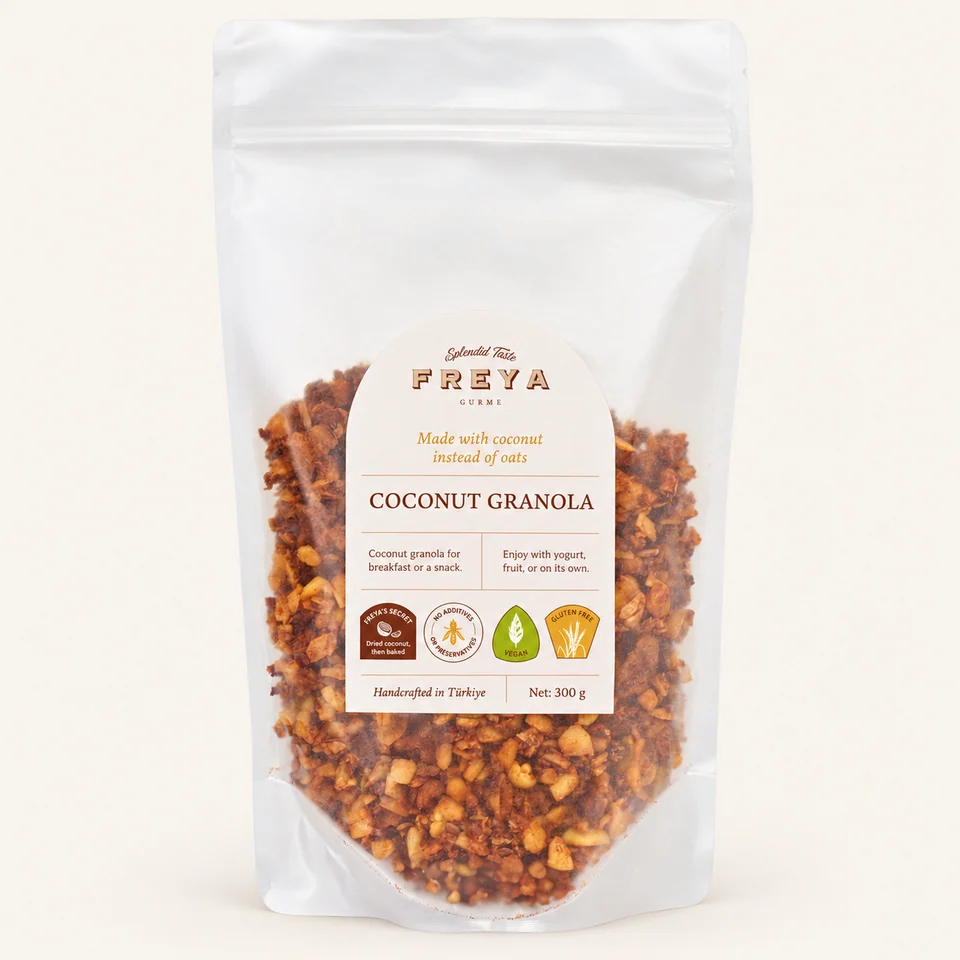
Granola is usually associated with toasted oats, nuts, and sweeteners, but recipes vary. Freya Gurme Coconut Granola uses dried coconut as its base, giving it a different texture and flavor from an oat-based blend. It can be eaten with yogurt or milk, scattered over fruit, or used as a crunchy finishing touch.
What does gluten-free granola mean?
A product's gluten-free status depends on its ingredients and how it is made. A coconut base does not establish that status on its own. If you need to avoid gluten, check the current package for the relevant labeling and information about manufacturing or cross-contact. The same care applies to any yogurt, toppings, and other ingredients added to a bowl.
Read the whole ingredient list
Granola can contain nuts, seeds, dried fruit, chocolate, and different sweeteners. Those choices affect flavor, allergens, and the nutritional profile. Compare the actual label and serving information, and choose a portion that works with the rest of your meal.
Terms such as “natural” or “no refined sugar” do not mean a food has no sugar. Nor does coconut automatically turn granola into a low-calorie food. The useful question is what the product contains and how you want to enjoy it.
Four ways to serve coconut granola
- With yogurt: use plain yogurt, fresh fruit, and a spoonful of granola for contrast.
- With milk: pour dairy or plant-based milk over the granola just before eating.
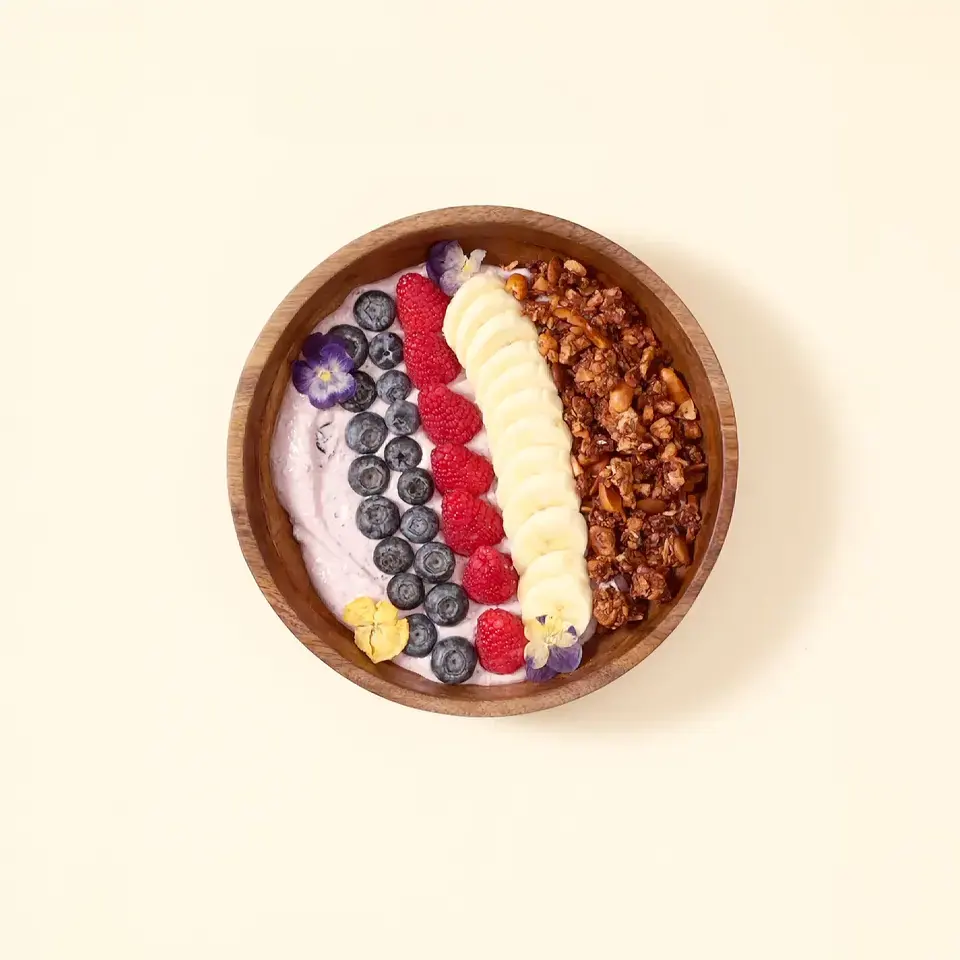
- On a smoothie bowl: keep the base thick, then add the granola at the end to preserve its crunch.
- Over fruit: scatter a little over sliced banana, berries, or baked fruit.
Keep the texture crisp
Close the package tightly and follow its storage instructions. Moisture softens granola, so keep it separate from yogurt or cut fruit until serving. If you pack breakfast ahead, carry the granola in a small dry container.
Coconut granola works best as a flexible pantry ingredient: choose the base and toppings for the flavors you enjoy, and let the contrast between creamy, juicy, and crunchy ingredients do the work.